Services

Individual Counselling and Psychotherapy
Individual counselling is a confidential space to explore emotional and psychological difficulties, one-on-one, at your pace, with no pressure to have it all figured out first. Available in person at my Macquarie Street rooms in Sydney’s CBD, or by secure telehealth anywhere in Australia.
Most people arrive with something they’ve been carrying for a while, often longer than they’d admit. If what’s bringing you in isn’t listed here, it still counts. Nothing is too small to bring. That might be:
- Stress, burnout, and emotional exhaustion — running on empty, or getting home with nothing left
- Anxiety — persistent worry, overthinking, panic, or a body that won’t settle
- Depression and low mood — flatness, loss of motivation, or feeling disconnected from things you used to care about
- Trauma — including PTSD, childhood experiences, and events that still shape how you feel and react today
- Perinatal loss — miscarriage, stillbirth, termination for medical reasons, and the grief that often goes unacknowledged
- Postpartum adjustment and mood changes — postnatal depression and anxiety, identity shifts, and the gap between how early parenthood was supposed to feel and how it actually does
- Premenstrual Dysphoric Disorder (PMDD) — cyclical changes in mood that affect your relationships, work, and sense of self
- Relationship and attachment difficulties — the same patterns repeating, difficulty trusting, or feeling too much or too little in close relationships
- Identity and life transitions — career change, separation, becoming a parent, loss, or a shift in who you understand yourself to be
In our first session we’ll talk about what’s bringing you in, what you’ve already tried, and what you want to be different. You don’t need to prepare anything or have the right words, that’s my job to help with. By the end, you’ll have a sense of how we’d work together and whether it feels like the right fit.

Couples Counselling
Couples counselling is a supportive space to understand the patterns that create distance between you, and to find a way back to each other. You’ll attend together, in person at my Macquarie Street rooms in Sydney’s CBD, or by secure telehealth anywhere in Australia.
If you’re not sure your situation warrants therapy, it probably does. Most couples wait far longer than they need to. Most couples arrive knowing something isn’t working, even if they can’t name it precisely. That might be:
- The same fight, over and over — different topics, same ending
- Feeling like roommates — functional, polite, and quietly lonely
- Communication that goes nowhere — one of you pushing to talk, the other shutting down
- Rebuilding after an affair or betrayal — and working out whether trust can be restored
- Loss of intimacy or physical connection — including mismatched desire
- Resentment that’s built up over years — often around fairness, effort, or feeling unseen
- Conflict about parenting, money, family, or the division of labour
- Adjusting to a major change — a new baby, illness, relocation, retirement, or blending families
- Deciding whether to stay — including working through separation thoughtfully, if that’s where you land
Couples counselling focuses on the relational cycles of conflict, disconnection, and misunderstanding that create emotional distance between partners. Using an EFT-informed approach (Emotionally Focused Therapy), one of the most well-researched models in couples work, sessions aim to:
- Break repeating conflict cycles
- Improve emotional connection
- Strengthen communication
- Support repair after rupture
- Rebuild trust and intimacy
The focus is on helping you develop healthier ways of relating and build a stronger, more secure relationship. In practice, this means we spend less time refereeing the surface argument and more time understanding what’s happening underneath it. The fear, the longing, and the protective moves you each make without meaning to. Once you can see the cycle, you can step out of it together.
Intimacy and connection
Intimacy therapy, sometimes called sex therapy, explores the same relational patterns of conflict, disconnection, mistrust, and misunderstanding that can affect a relationship, while also considering how these patterns show up in physical and sexual closeness. This work is conversation-based and can support couples experiencing low or mismatched desire, sex that has become routine, avoidant, or stopped altogether, painful sex, erectile difficulties, difficulty reaching orgasm, changes in intimacy following childbirth, illness, surgery, or menopause, rebuilding physical closeness after betrayal or a long period of distance, or feeling more like housemates than partners. Emotional and physical closeness are often deeply connected. When couples no longer feel safe, connected, or understood by one another, desire is often one of the first things to disappear and frequently one of the last things to return. Intimacy therapy works with both the emotional and physical aspects of connection, helping couples understand their patterns and rebuild safety, closeness, and intimacy.
Youth and Adolescent Therapy
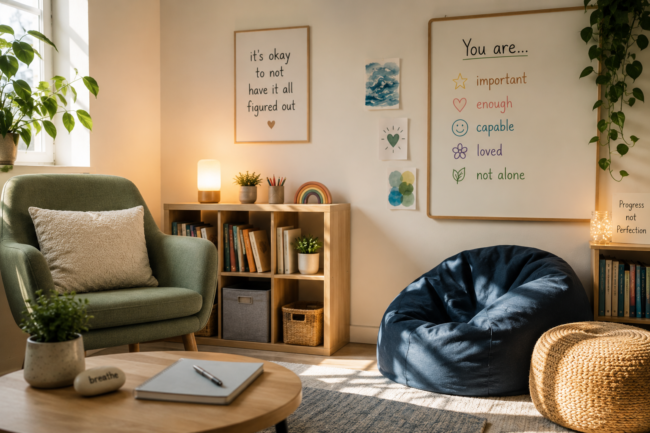
Youth and adolescent therapy provides a safe, supportive space for young people to talk about what they are experiencing and develop a better understanding of themselves, their emotions, and their relationships. Available in person at my Macquarie Street rooms in Sydney’s CBD, or by secure telehealth anywhere in Australia.
Youth and adolescent therapy provides a safe, supportive space for young people aged 7 to 18 to talk about what they are experiencing and develop a better understanding of themselves, their emotions, and their relationships. Children and teenagers may sometimes experience anxiety, low mood, changes in behaviour, friendship difficulties, family changes, school pressures, self-esteem concerns, or challenges navigating emotions and relationships. Therapy is tailored to each young person’s age, developmental stage, personality, and individual needs, using approaches that feel comfortable and age appropriate. The focus is on building trust, developing emotional awareness and practical coping skills, and helping young people feel supported and more confident as they navigate the challenges of growing up. Sometimes, a collaborative care approach is best. This may be particularly important when the best interest of your child involves working collaboratively with the school, Occupational Therapist or Psychiarist for diagnoses such as ADHD or Autism.

Trauma Therapy
Trauma therapy is paced, collaborative work that helps your nervous system move out of survival mode and into a greater sense of safety. You will never be pushed to tell your story before you’re ready, and you don’t have to relive what happened for therapy to help. Available in person at my Macquarie Street rooms in Sydney’s CBD, or by secure telehealth anywhere in Australia. You don’t need a diagnosis, and you don’t need to be certain that what happened to you “counts.” People come with:
- PTSD — flashbacks, nightmares, hypervigilance, or being easily startled
- Complex trauma (C-PTSD) — where harm happened repeatedly, often in childhood or within relationships
- Childhood trauma — including neglect, emotional abuse, and growing up in a home that never felt safe
- A single traumatic event — an assault, accident, medical emergency, or sudden loss
- Sexual assault or abuse
- Birth trauma and traumatic perinatal experiences
- Feeling constantly on edge — unable to relax even when nothing is wrong
- Numbness, shutdown, or dissociation — feeling detached from yourself, your body, or the people around you
- Emotional responses that feel out of proportion — and the shame that follows them
- Relationship patterns shaped by trauma — difficulty trusting, fear of closeness, or bracing for things to go wrong
If you’re not sure whether what you experienced was traumatic, that uncertainty is common and worth exploring rather than resolving alone. Trauma therapy focuses on supporting the nervous system to move out of survival states and into a greater sense of safety and stability. This work gently explores and processes past traumatic experiences, including complex trauma and PTSD, in a paced, collaborative way. Therapy recognises how trauma can shape emotional responses, relationships, and patterns of coping, and works to create new ways of experiencing safety, regulation, and connection. Sessions are tailored to your individual experiences, allowing you to explore difficult emotions in a supportive and non-judgemental environment. Over time, therapy can help strengthen emotional resilience, improve self-awareness, and develop practical coping strategies that support healthier relationships, greater confidence, and long-term emotional wellbeing. In practice, the early work is usually about stability rather than the past. We build your capacity to stay grounded first, so that when we do approach difficult material, you have somewhere solid to stand.
If you or someone else is in immediate danger, call 000.
- Lifeline — 13 11 14 (24/7 crisis support)
- 13YARN — 13 92 76 (24/7 crisis support for Aboriginal and Torres Strait Islander people)
- Suicide Call Back Service — 1300 659 467 (24/7)
- 1800RESPECT — 1800 737 732 (24/7 sexual assault, domestic and family violence)
- PANDA — 1300 726 306 (perinatal mental health, weekdays)
- Kids Helpline — 1800 55 1800 (24/7, ages 5–25)
- Beyond Blue — 1300 22 4636 (24/7)
- QLife — 1800 184 527 (LGBTQIA+ peer support, 3pm–midnight)

Perinatal & Postpartum Counselling
Specialised support for the emotional experience of fertility, pregnancy, loss, and early parenthood, including the parts nobody warned you about. If you need urgent support, contact PANDA on 1300 726 306, Lifeline on 13 11 14, or 000 in an emergency.
You can come alone or with a partner. Available in person at my Macquarie Street rooms in Sydney’s CBD, or by secure telehealth anywhere in Australia. Babies are welcome in the room.
Perinatal loss counselling provides compassionate support for navigating grief, emotional pain, and feelings of loss, including the losses that go unacknowledged and the grief that doesn’t follow a tidy shape.
Postpartum depression counselling helps you understand the emotional changes you’re experiencing, manage overwhelming feelings, and develop healthier coping strategies during this significant stage of life.
Throughout, the approach is attachment-informed. We look at what’s happening for you emotionally, how your relationships are holding up, and how you’re relating to yourself in a period where most people are unrelentingly hard on themselves. People come to me experiencing;
- Miscarriage, stillbirth, and neonatal loss, including grief that others expect you to be over by now
- Termination for medical reasons, a loss that often comes with unbearable decision-making and very little acknowledgement
- Recurrent loss and the fear that comes with trying again
- Fertility struggles and IVF: the waiting, the grief each month, the strain it puts on a relationship
- Postnatal depression: flatness, hopelessness, or feeling disconnected from your baby
- Postnatal anxiety: intrusive thoughts, constant checking, or being unable to rest even when you can
- Birth trauma, a birth that was frightening, out of your control, or nothing like you’d planned
- Prenatal anxiety and depression, distress during pregnancy, which is more common than people realise
- Identity change after birth: grieving who you were, and not recognising who you’ve become
- Rage and resentment at your partner, your body, your circumstances
- Feeling like you’re failing at something you wanted so badly, and the guilt of not enjoying it
- Pregnancy after loss: carrying fear and hope at the same time
- Relationship strain in the transition to parenthood
If what you’re feeling isn’t on this list, or you can’t name it yet, that’s a fine place to start. This work offers a thoughtful, supportive space to process these experiences with care and sensitivity.
Premenstrual Dysphoric Disorder (PMDD) Therapy
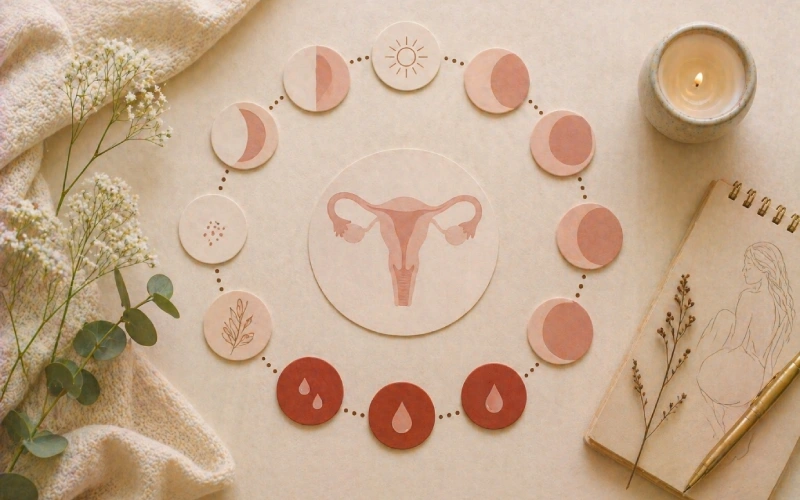
Living with Premenstrual Dysphoric Disorder can feel overwhelming, exhausting, and deeply isolating. If you feel like a different person for one to two weeks of every month, you are not imagining it and you are not too sensitive.
Available in person at my Macquarie Street rooms in Sydney’s CBD, or by secure telehealth anywhere in Australia.
PMDD Therapy at Darling Therapy is designed to help you understand cyclical mood changes and their real impact on your emotional wellbeing, relationships, and everyday life. Therapy supports emotional regulation across the menstrual cycle, helping you make sense of sudden shifts in mood, thoughts, and reactions. We explore how PMDD affects your sense of self and your connection with others, focusing on building lasting stability, greater awareness, self-compassion, and emotional resilience, so you can reclaim control of your life and feel like yourself again.
Practically, that often means learning to anticipate the phase rather than be ambushed by it, developing plans for the hardest days, reducing the shame that builds up over years, and repairing relationships that have taken a hit. Where useful, this work sits alongside medical treatment rather than replacing it.
- Severe mood changes before your period that lift once it arrives
- Irritability and anger that feel out of proportion and out of your control
- Low mood, hopelessness, or despair that arrives on schedule
- Anxiety and dread in the luteal phase
- Feeling like two different people across one cycle
- Damage to relationships: fights you didn’t want, words you can’t take back, and the guilt that follows
- Impact on work or study during part of every month
- Shame and self-blame for something that feels like a personal failing
- Being dismissed, told it’s just PMS, or spending years without an explanation
- PMDD alongside other things: anxiety, depression, ADHD, trauma, or perimenopause
If you’re still working out whether this is what’s happening, that’s a reasonable place to begin.
If you or someone else is in immediate danger, call 000.
- Lifeline — 13 11 14 (24/7 crisis support)
- 13YARN — 13 92 76 (24/7 crisis support for Aboriginal and Torres Strait Islander people)
- Suicide Call Back Service — 1300 659 467 (24/7)
- 1800RESPECT — 1800 737 732 (24/7 sexual assault, domestic and family violence)
- PANDA — 1300 726 306 (perinatal mental health, weekdays)
- Kids Helpline — 1800 55 1800 (24/7, ages 5–25)
- Beyond Blue — 1300 22 4636 (24/7)
- QLife — 1800 184 527 (LGBTQIA+ peer support, 3pm–midnight)